A fourth-year fellow probes cloud droplets to boost climate predictions.
Fellows’ Research
Genomic field work
A UC Davis fellow combines computing, the corn genome and growing data to help farmers forecast biofortified crop production.
Tracking space debris
A Computational Science Graduate Fellowship recipient monitors threats to satellites in Earth’s ionosphere by modeling plasma waves.
Decisive achievement
A computational sciences fellow models COVID-19 virus variants and examines how people weigh complex decisions.
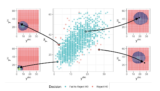
Statistically significant
A LANL statistician helps cosmologists and epidemiologists grasp their data and answer vital questions.
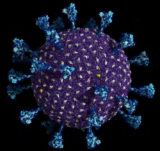
Decoding disease
A CSGF fellow doggedly applies computational models to COVID-19 and cancer.
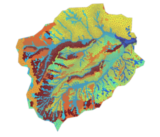
River of data
Oak Ridge-developed open-source software is helping model watersheds and related climate issues the world over
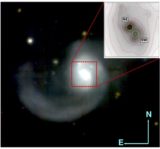
Optimized for discovery
A computational mathematician finds a national lab ideal for a highly collaborative career.
Crafting community
The Department of Energy Computational Science Graduate Fellowship celebrates 30 years of cultivating leaders and innovators.
New podcast features labs and fellows
Series celebrates DOE Computational Science Fellowship’s 30th anniversary.
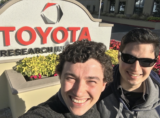
Luck and learning
Friends – and computational science fellows – team up with Toyota and Berkeley Lab, combining serendipity and machine learning in a search for sustainable-energy materials.

Pandemic view – plus privacy
A fellow helps guide an international volunteer effort to develop COVID Watch, a mobile telephone application that prioritizes privacy.
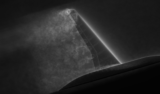
Beyond the tunnel
Stanford-led team turns to Argonne’s Mira to fine-tune a computational route around aircraft wind-tunnel testing.

Efficiency surge
A DOE CSGF recipient at the University of Texas took on a hurricane-flooding simulation and blew away limits on its performance.
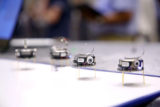
Robot whisperer
A DOE computational science fellow combines biology, technology and more to explore behavior, swarms and space.
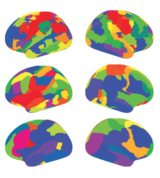
Higher learning
Computational Science Graduate Fellow Alnur Ali rides an early career at Microsoft to the upper ranks of machine-learning research.
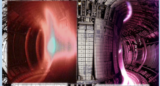
A fusion fix
Graduate fellow leads software project to head off damaging fusion energy disruptions.
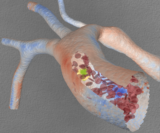
Virtual vessels
The circulatory simulations a Computational Science Graduate Fellowship alumna now at Duke University could help physicians choose the best treatments before operating.

Ditching intuition
Replacing lab tedium for efficiency, SLAC-Stanford team taps machine learning to screen for chemicals with promising properties.
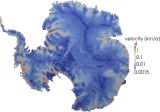
Slippery subject
University of Texas researchers are out to improve computational models of ice sheets by refining estimates of basal friction: how much rocks and earth slow the sheet’s movement.
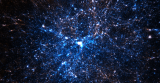
Universe in a day
A team working on the Titan supercomputer simulates the biggest thing of all in a flash, then shares.
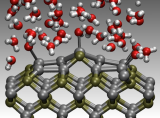
Back to the hydrogen future
At Lawrence Livermore National Laboratory, Computational Science Graduate Fellowship alum Brandon Wood applies the world’s most sophisticated molecular dynamics codes on America’s leading supercomputers to model hydrogen’s reaction kinetics.
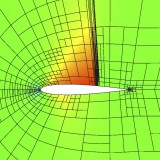
Foiling airflow error
Portraying airflow over wings and other fluid movement is tricky. A Department of Energy award for early-career researchers is helping a former DOE CSGF fellow devise mathematical methods to decrease the error rate in fluid modeling.